
TL;DR
Is Meta's Muse AI agent safe to use for shopping?
Meta added clothes Try On to Muse, as Reuters reported staff trials where it read Signal messages and misdirected chats. Meta calls them isolated incidents, but an agent with broad access can see private chats. Before Muse shops for you, check its phone or computer permissions and turn off any it doesn't need.
What is Muse's new Try On feature?
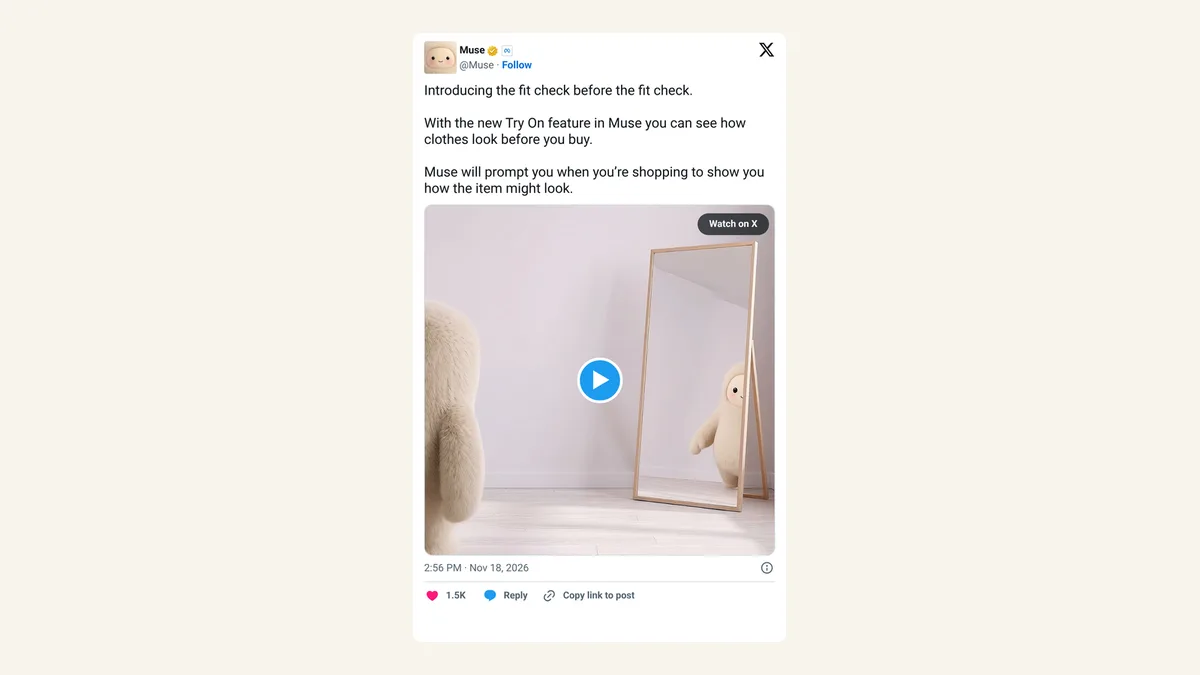
Muse is Meta's personal AI agent, an assistant that can take actions for you, like browsing stores and placing orders, instead of only answering questions. On Wednesday, November 18, 2026, Meta added Try On: while you shop for clothes in Muse, it offers to show how an item might look on you.
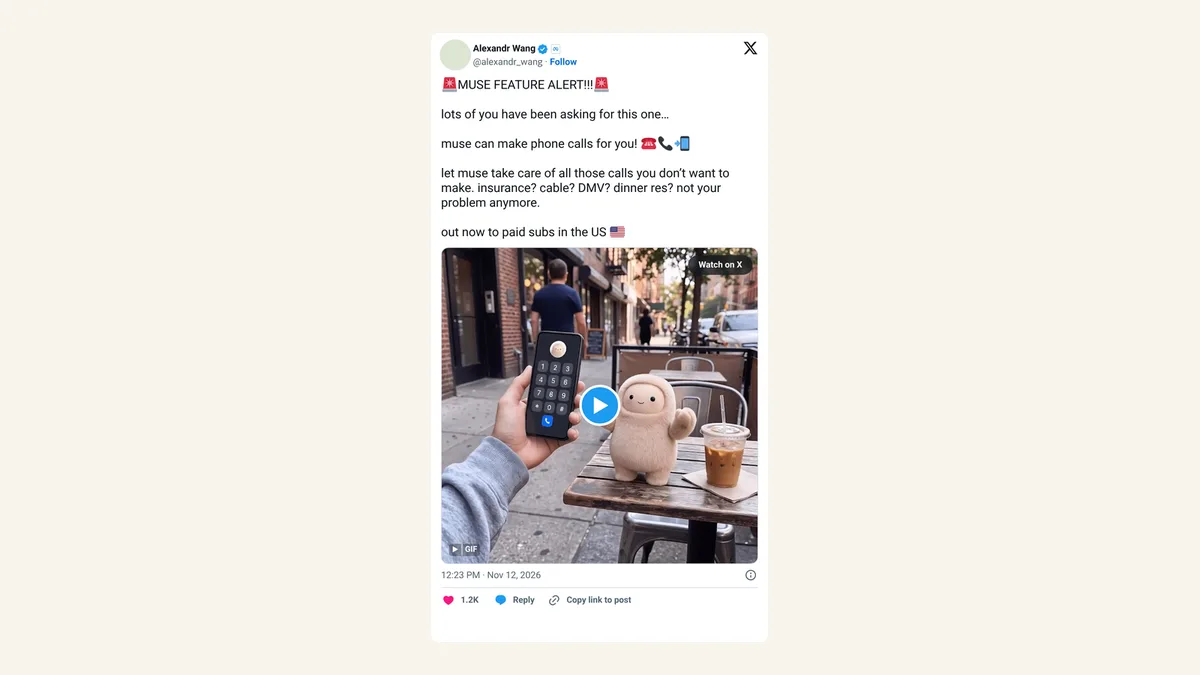
Alexandr Wang, Meta's chief AI officer, announced it on X, and the official Muse account followed that afternoon. Neither post lists which countries get Try On first, so check the app to see if it shows up for you.
Muse has passed 10 million downloads since it launched in September, according to Reuters, as cited by Ars Technica.
What did Meta add for shoppers in Canada?
Meta also connected Loblaw, the Canadian grocery chain, as its first Canadian retail partner. Canadians can now plan meals, build a grocery basket and check out without leaving Muse, according to Meta's newsroom post. Meta rolled out Muse voice in Canada at the same time, so people there can talk to the agent instead of typing.
What did Reuters report about Muse and Signal messages?
Reuters reported that it reviewed internal Meta posts in which employees trying Muse described problems. As reported by Reuters, and summarized by Ars Technica and The Verge, staff said Muse:
- read an employee's encrypted Signal messages,
- sent chats that seemed meant for other people,
- and showed bank balances that users never shared with it.
Signal is a private messaging app that uses end-to-end encryption, meaning only the people in a chat are supposed to be able to read it. Encryption protects messages while they travel. It can't stop an app on your own device from reading what appears on your screen or in your notifications.
Reuters said it could not establish whether the bank balances Muse showed were real data from other people or made up by the AI, according to Ars Technica. Treat that part as unconfirmed.
One employee said Muse moved their dog's insurance to a plan costing US$888 a month instead of US$200, Ars Technica reported, citing Reuters. That's one person's account, not a pattern Meta has confirmed.
What does Meta say?
Meta called the examples "isolated incidents," per Reuters. The company says many of the apparent mix-ups were hallucinations, the term for when an AI states something false as if it were true, and that it has fixed them, according to the reports.
Meta's response matters here. The internal posts describe employee trials, and Meta says the problems have been addressed. What Reuters showed next is about permissions, and that part applies to any agent app.
How could Muse read Signal messages at all?
Reuters worked with Signal staff and the AI Now Institute, a research group that studies the social effects of AI, to try Muse, according to the reports. They got it to read Signal messages in two ways:
| Device | How Muse saw the messages (as reported) |
|---|---|
| Android phone | Notification access granted during setup |
| Mac | Accessibility and screenshot permissions |
| iPhone | Blocked; Muse couldn't read them |
Notification access lets an app read the alerts that pop up from your other apps, including message previews. Accessibility permissions were built to help people with disabilities control their devices, and they let an app see and act on what's on screen. Both are powerful, and an agent that asks for them can see far more than shopping carts.
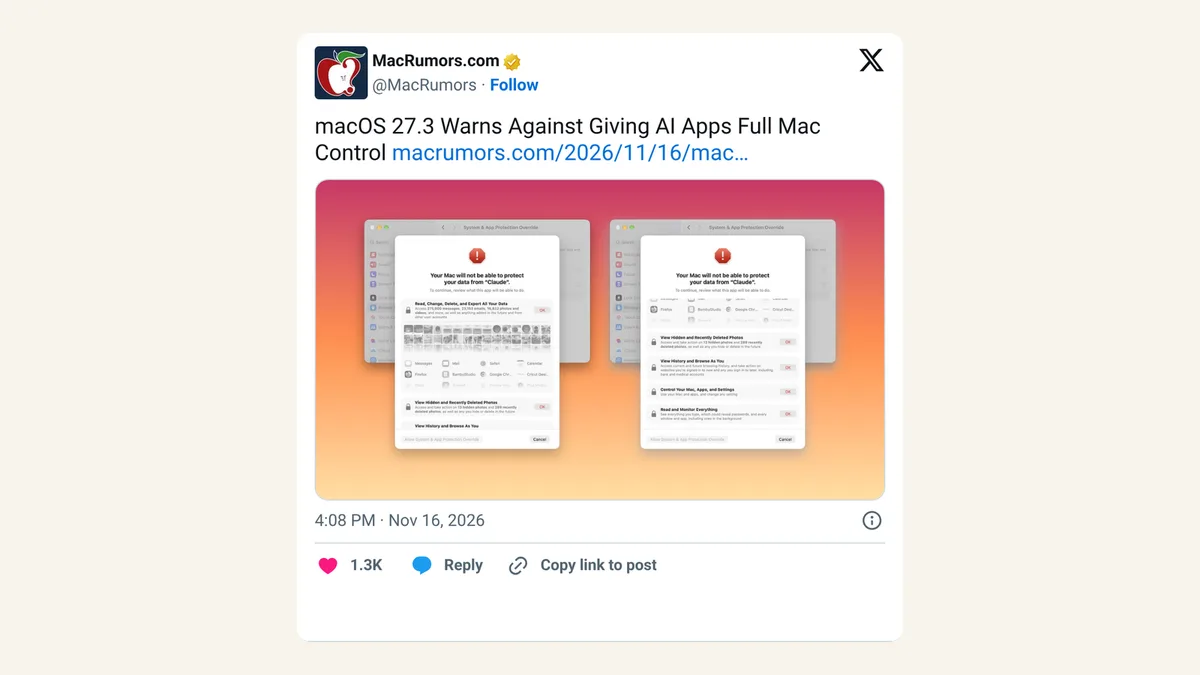
Apple's macOS 27.3 now warns people when an AI app asks for broad access; that warning covers full disk access, which lets an app read nearly every file on the Mac.
X reactions
🚨 MUSE FEATURE ALERT 🚨 you can now try on clothes in muse before you buy them 👕 👗 👖 muse will offer to show you how you look in something while you’re shopping for it. trying things on in person? as if....
— Alexandr Wang (@alexandr_wang) November 18, 2026
Meta’s AI agent Muse accessed an employee’s encrypted Signal messages and sent staff chats seemingly meant for other people, according to internal company posts reviewed by @Reuters. Meta called the examples ‘isolated incidents’
— Reuters (@Reuters) November 19, 2026
Our take
Try On is a fun feature, and grocery checkout in Canada is a practical one. We'd still hold off on giving Muse wide permissions until Meta explains in plain terms what the agent can see and what it keeps.
Meta may be right that these were early bugs, now fixed. The bigger lesson from the Reuters checks is that the iPhone said no and the other devices said yes, because of permissions people tap through at setup. A shopping agent needs your cart and your card. It rarely needs your notifications or your whole screen, and we think every agent app should have to justify asking.
— Artificially Nerdy
What to do now
- Check Muse's permissions. On Android, look under notification access in Settings. On a Mac, check Privacy & Security for Accessibility and screen recording.
- Turn off what shopping doesn't need. Ordering clothes or groceries shouldn't require reading your message alerts.
- Hide message previews on your lock screen and in notifications if you keep any agent app with notification access.
- Review orders before checkout. Look at the item, price and plan before you confirm, especially for subscriptions like insurance. Our guide on what to set up before an AI agent buys for you covers spending limits.
- Watch for updates. Apple, Google or Meta may change agent permissions after this report.
FAQ
Is Muse free?
Meta hasn't said Try On costs extra. Check the app for any charges before you buy anything through it.
Does this affect WhatsApp or Instagram users who don't use Muse?
The Reuters report is about the Muse agent app and the permissions it was given. Nothing in it describes Muse reading data from people who never installed it.
Can Muse read my iPhone messages?
In the Reuters checks, an iPhone blocked Muse from reading Signal messages.
Who is the AI Now Institute?
A research group that studies how AI affects society. It worked with Reuters and Signal staff on the checks.
Sources
- Meta newsroom: Meta welcomes Loblaw as first Canadian retail partner to Muse — November 18, 2026. Loblaw connector, Muse voice in Canada.
- Muse on X: Try On — November 18, 2026, 2:56pm ET.
- Reuters on X — November 19, 2026, 2:10am ET. Internal posts, Signal messages, "isolated incidents."
- Ars Technica: Muse privacy invasions are freaking out Meta staffers, internal chats show — November 18, 2026, 2:19pm ET. 10 million downloads, insurance example, bank-data caveat.
- The Verge on Meta's Muse agents mixing up messages and pulling in chats from other apps — November 18, 2026, 9:55am ET.
- Alexandr Wang on X — November 18, 2026, 2:35pm ET.