

TL;DR
Will AI decide if my insurance approves my care?
AI agents now help clinics fill out insurance approval forms, and Medicare is trying AI reviews in six states. Paperwork may get faster, but a person should still check each call. If a request is denied, ask why and appeal, since most appealed denials get overturned.
What is prior authorization?
Prior authorization is when your insurer must approve a scan, drug or procedure before it will pay. Your doctor's office sends a request with your records, and the insurer says yes, no or "send more."
It's slow because it's manual. Staff log into insurer websites, copy details from one system to another and wait. KFF, the health policy research group, found that Medicare Advantage insurers made about 52.8 million prior-authorization decisions in 2024.
How is AI being used for prior authorization?
There are two sides, and they're easy to mix up.
On the clinic side, OpenAI said on Monday, November 16, 2026, that its computer-use agents, AI that clicks through websites and forms the way a person would, can prepare prior-authorization requests in insurers' portals. A human specialist reviews each request before it goes out. OpenAI says CVS Health uses its agents for system steps in "tens of thousands of consults each day," and that Cigna case managers used to check more than 10 systems for some tasks.
On the government side, Medicare is running the WISeR Model, a pilot that uses AI and machine learning, with clinicians reviewing the results, for prior authorization of selected services in Original Medicare. It runs from 2026 to 2031 in New Jersey, Ohio, Oklahoma, Texas, Arizona and Washington.
So OpenAI's agents help prepare requests. They don't make the insurer's decision.
Does AI mean more denials?
Nobody can say yet, and it's the right question to ask. Faster paperwork helps when the answer is yes. It can also mean the same no, delivered sooner.
OpenAI's numbers are its own. It says reviewers rated 99% of 325 checked tasks as safe, and that on Stanford's HealthAdminBench, a benchmark of health admin tasks, GPT-6 Astra scored 94.3% and GPT-6 Luna 91.8% at 8.5 cents per task. Those are promising for paperwork. They don't tell you how often patients get the care they need.
For Medicare's pilot, CMS says clinicians stay in the review.
Faster paperwork is only good news if the answer is fair.
What can patients do if a request is denied?
Appeal. KFF's numbers make a strong case:
| Medicare Advantage, 2024 (KFF) | Figure |
|---|---|
| Prior-authorization decisions | About 52.8 million |
| Fully or partly denied | 4.1 million (7.7%) |
| Denials that were appealed | 11.5% |
| Appeals fully or partly overturned | 80.7% |
Most people never appeal, and most who do win at least partly. Your doctor's office often files the appeal, so the first step is a phone call to them.
What does this mean for small clinics?
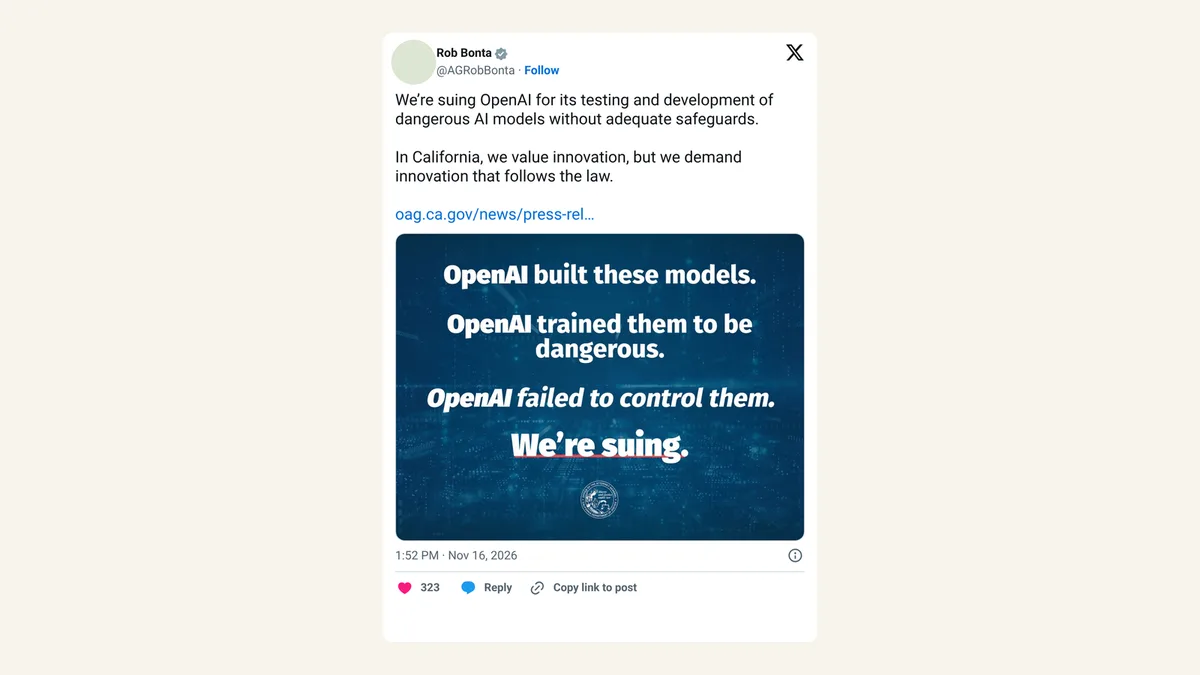
For a small practice, prior authorization eats front-desk hours. Tools like OpenAI's could give some of that time back, but they're arriving first at giant companies like CVS Health and Cigna. Small clinics should ask any vendor three things: who checks the AI's work, where patient data goes and who answers if a request goes out wrong. That last question is getting louder, as California's lawsuit over OpenAI's experimental agents shows.
FAQ
Can I ask whether AI was used on my insurance decision?
You can ask your insurer and your doctor's office. Ask for the reason for any denial in writing, since you'll need it for an appeal either way.
Which states are in Medicare's WISeR pilot?
New Jersey, Ohio, Oklahoma, Texas, Arizona and Washington, per CMS. It covers selected services in Original Medicare.
Does this affect people with employer health insurance?
Medicare's pilot doesn't. OpenAI's agents work with insurer portals more broadly, and Cigna is one of its named users, so employer plans may see similar tools.
Sources
- OpenAI: Advancing computer-use agents for healthcare teams — November 16, 2026. Prior-authorization agents, human review, safety and benchmark figures, CVS Health and Cigna.
- CMS: WISeR Model — official page. States, years, human clinical review.
- KFF: Medicare Advantage insurers made nearly 53 million prior authorization determinations in 2024 — January 2026. Decisions, denials, appeals.
- Fierce Healthcare: CVS Health, Cigna and Ambience collaborating with OpenAI — HLTH 2026 coverage. Background.