
TL;DR
How are hackers using AI now?
Google says attackers now run AI that reads a security fix, finds the hole it closed and attacks sites that haven't updated, with no person involved. That means late updates are riskier than ever. Turn on automatic updates and set a spending cap on any AI account you pay for.
What did Google find?
Google's Threat Intelligence Group and its Mandiant security team published their quarterly AI threat report on Monday, November 16, 2026. The biggest finding came from an exposed server hosting a tool called "exploit_agent."
It's a multi-agent framework, meaning several AI programs working together, hooked up to both big commercial models and models run on the attacker's own machines. Google says it compares a popular web app's code before and after a security patch, works out which flaw the patch fixed, writes an exploit (code that abuses that flaw) and runs it "without human intervention."
Google calls it the first fully autonomous exploitation loop of this kind it has observed. Its records showed interest in French media, entertainment and education websites.
The report also says criminals are using open-source AI hacking tools in real break-ins.
Why does this matter for small websites?
A security patch tells the world where a weakness was. For years, attackers needed time to turn that into a working attack, and that gap gave site owners a few days to update.
If AI does that work in hours, the safe window shrinks. A small store or blog running an old plugin is exactly the kind of easy target automated tools look for.
What is LLMjacking?
LLMjacking is when criminals steal the login or API key for someone's paid AI account and use or resell that AI access. An API key is the password-like code that lets apps use an AI service and bills the owner.
Google's numbers:
| What Google reports | Figure |
|---|---|
| Fraud charges in one day, some cases | Over US$100,000 |
| Worst cases before they were stopped | Up to US$1 million |
| Resale price of stolen AI access | US$0.10 to US$25 per million tokens |
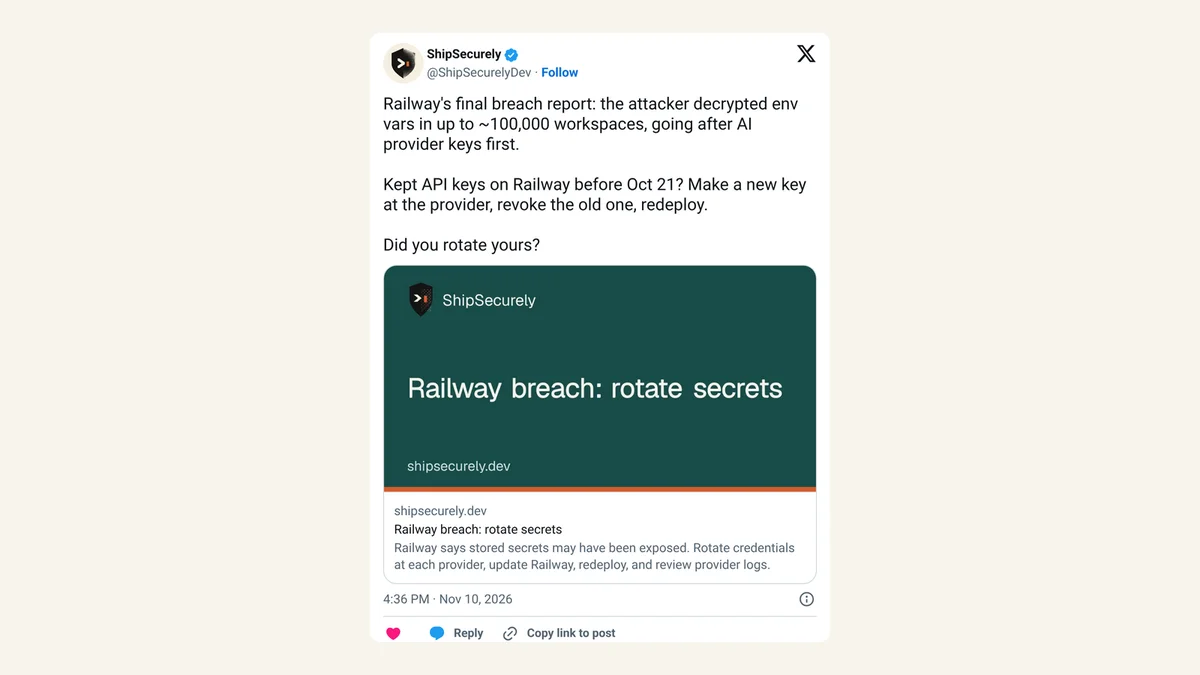
Tokens are the chunks of text AI services bill by. Stolen keys are often found in code posted publicly on GitHub, the site where developers share code. It's the same risk behind this month's stolen AI keys at Railway.
X reactions
Google Reveals How Hackers Are Using AI Agents to Automate Real-World Cyberattacks
— Cyber Security News (@The_Cyber_News) November 16, 2026
Details: https://t.co/IjaZmtq3sI
Hackers are no longer just asking AI chatbots for help. They now run AI agents that can scan, break in, and move through networks with very little human input. https://t.co/4pXLF2o3FQ
Our take
This is Google's own report with no outside check yet, so we'd keep the panic level low. The advice it points to is old and boring, and it works. Update fast, and treat an AI key like a credit card number.
What's new is the speed. "I'll update this weekend" used to be fine for a small site. Now it's a bet that no machine reads the patch notes before you do. Automatic updates are the cheapest security you'll ever buy.
— Artificially Nerdy
How to protect your site and AI accounts
- Turn on automatic updates for your website platform, plugins, themes and store apps.
- Remove plugins you don't use. Every extra one is another door.
- Set a hard spending limit and billing alerts on every paid AI account, so a stolen key can't run for days.
- Never paste API keys into code you share or into public files. Store them in your tool's secret settings, and lock down your AI API keys with separate keys per app.
- Rotate a key right away if you see charges you don't recognize.
FAQ
Is this the first AI cyberattack?
No. Google calls it the first fully autonomous patch-to-exploit loop of this kind it has observed. AI has helped attackers before.
Will my AI provider refund charges from a stolen key?
It depends on the provider. Google's report doesn't cover refunds, so check your provider's terms and contact support quickly.
How do I know if my AI key leaked?
Watch for usage spikes or charges you don't recognize. Billing alerts on your AI account are the fastest warning.
Sources
- Google Cloud: GTIG AI Threat Tracker: Agentic Threat Activity Crosses a Significant Threshold — November 16, 2026. exploit_agent, LLMjacking figures, resale prices.
- SiliconANGLE: Google says an AI framework turned security patches into exploits with no human in the loop — November 16, 2026. Background.
- Cyber Security News on X — November 16, 2026, 4:01pm ET.