

TL;DR
How much money did OpenAI make and lose last quarter?
OpenAI's revenue grew about 50% to $10 billion last quarter, but it lost $10.9 billion running the business, the Wall Street Journal reports. AI tools still cost their makers more than they earn, so plan prices and limits may keep shifting. Nothing to do yet, but know your plan's limits.
Skip the finance: OpenAI is selling a lot more, and still spending more than it sells.
What did the WSJ report about OpenAI's finances?
On Tuesday, November 10, 2026, the Wall Street Journal reported that OpenAI's revenue rose about 50% to $10 billion in the third quarter. Reuters picked up the story that evening. The WSJ cites documents OpenAI shared with its investors. OpenAI hasn't published the figures, and it didn't immediately respond to Reuters' request for comment.
The report shows a bigger hole on the other side. According to the WSJ, OpenAI's operating loss widened to $10.9 billion from $10.1 billion in the quarter before.
The numbers, according to the WSJ report
| Measure | Q3 2026 | Previous quarter |
|---|---|---|
| Revenue | about $10 billion (up about 50%) | not given in the report |
| Operating loss | $10.9 billion | $10.1 billion |
| Adjusted operating margin | -109% | -150% |
OpenAI is a private company, so it doesn't have to file public earnings reports the way listed companies do. Numbers like these usually surface through investor documents or press reports, which is why every figure here carries the WSJ's name.
What do "operating loss" and "operating margin" mean?
Operating loss is what's left when the cost of running the business, like computing power, staff and offices, is bigger than the money coming in. By the WSJ's figures, OpenAI's costs topped its revenue by $10.9 billion in three months.
Operating margin shows that gap as a share of revenue. A margin of -109% means that, by this measure, the company spent its revenue plus roughly another 109% of it. "Adjusted" means OpenAI calculated it with some costs left out, which companies often do to show the trend in their main business.
That trend is the one piece of good news for OpenAI in the report. The adjusted margin improved from -150% to -109% in a single quarter, according to the documents the WSJ viewed. Revenue grew faster than the losses did.
Is OpenAI making money from ChatGPT?
Not yet, going by these figures. Revenue is growing fast, but the cost of building and running AI models grew too. OpenAI's loss widened by about $800 million from one quarter to the next, according to the WSJ report, even as sales climbed.
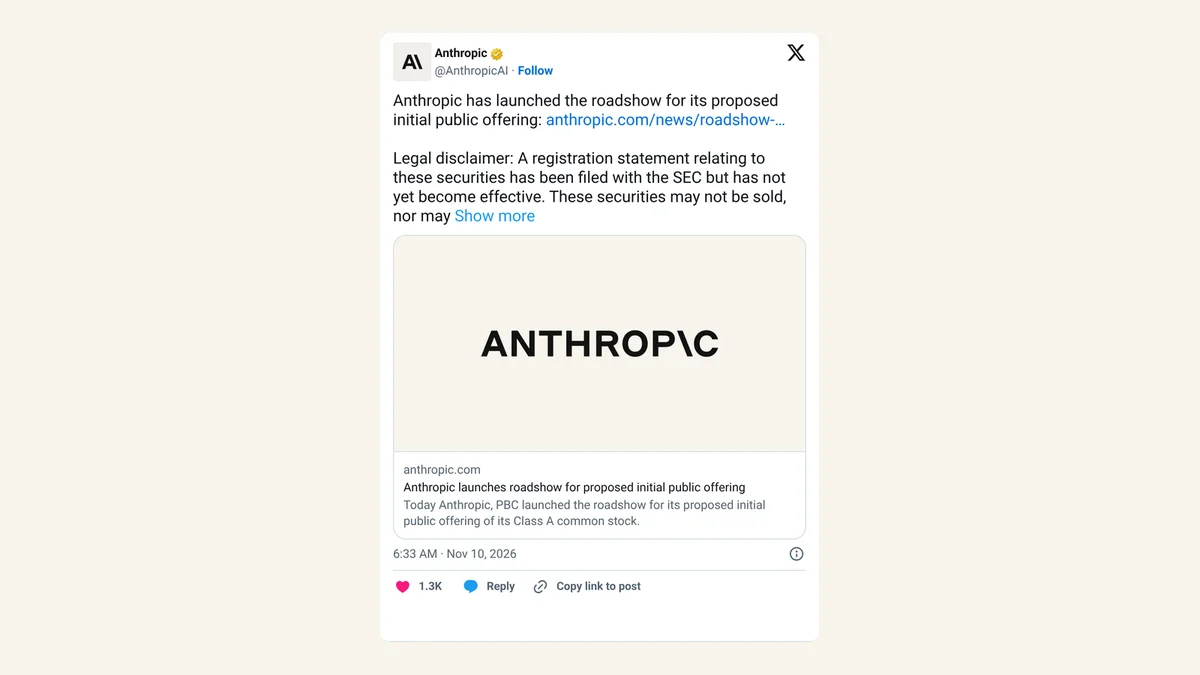
Investors are watching AI companies' books closely right now. Reuters notes the numbers came out as rival Anthropic, the maker of Claude, markets its shares ahead of its IPO, or first sale of stock to the public. WSJ Tech framed the loss as part of "the challenge of catching Anthropic."
What OpenAI's losses could mean for your AI plan
AI companies spending more than they earn helps explain the pricing you've been seeing across the industry: monthly usage caps, paid top-ups when you hit them, and "introductory" prices with an end date. Apple, for one, now sells one-time usage packs when Logic Pro users run out of AI allowance.
None of this means your ChatGPT plan will change next month. OpenAI hasn't announced any price changes tied to these numbers. But a company losing billions each quarter has every reason to keep adjusting what each plan includes. If your work or business leans on one AI tool, treat its price and limits as things that can move.
X reactions
The WSJ's own tech account shared the story, and one X user summed up the numbers in a single line:
OpenAI revenue jumped 50% to $10 billion in the third quarter, but its $10.9 billion in operating losses highlight the challenge of catching Anthropic https://t.co/FAu9KGObOf
— WSJ Tech (@WSJTech) November 10, 2026
openai did 10 billion in revenue last quarter and lost 10.9 billion. finally a strategy i understand
— Shef (@0xBueller) November 10, 2026
Our take
A company that grew sales 50% in a quarter is clearly selling something people want. The loss tells you what that something costs to make. Every chat, image and agent task runs on expensive chips, and for now OpenAI is covering much of the bill with investors' money.
The improving margin suggests OpenAI is working to close that gap, and closing it usually means some mix of more paying users, cheaper computing and plans that give you a bit less for the same price. That last part is the one to watch. Don't panic and don't switch tools over a headline. Do learn what your plan includes today, so you'll notice if a limit tightens or a price changes.
— Artificially Nerdy
What to do this week
- Check your ChatGPT plan's limits in your account settings and note what you use most, like images, voice or agent tasks.
- Paying for a business tool built on one AI model? Write down a backup option you could move to if prices change.
- Watch for end dates on any "introductory" or promotional AI price you rely on, and put them in your calendar.
- Keep your own copies of prompts, files and chat outputs you'd need if you ever switched services.
- Free ChatGPT user: nothing to do. These figures don't change your access today.
FAQ
Did OpenAI announce these numbers itself?
No. They come from a Wall Street Journal report citing investor documents, as reported by Reuters. OpenAI didn't immediately respond to Reuters' request for comment.
What time period does "third quarter" cover?
For a company on a calendar year, the third quarter runs from July 1 to September 30. The WSJ report describes it as OpenAI's third quarter.
Can I buy OpenAI stock?
Not directly. OpenAI is a private company and isn't listed on a stock exchange. Its rival Anthropic is the one preparing an IPO.
Will ChatGPT Plus get more expensive?
OpenAI hasn't announced any price change linked to this report. Check OpenAI's pricing page for current prices before you renew.
Sources
- Reuters via Investing.com: OpenAI posts steep losses even as quarterly revenue rises to $10 billion, WSJ reports — November 10, 2026, 6:53pm ET. Revenue ~$10 billion (up ~50%), operating loss $10.9 billion (from $10.1 billion), adjusted operating margin -109% (from -150%), no immediate OpenAI comment, Anthropic IPO context. No official OpenAI source exists.
- WSJ Tech on X — November 10, 2026, 6:03pm ET.
- Shef on X — November 10, 2026, 11:18pm ET.