
TL;DR
Will AI music take work from human musicians?
Some, and probably not where you'd guess. AI songs now flood streaming uploads, but listeners still mostly play human music. The bigger risk is cheaper background work like jingles and stock tracks. If you make music for a living, label your work, protect your voice and lyrics, and watch platform rules.
What just happened in AI music?
On Friday, November 13, 2026, an AI-generated singer named Xania Monet won artist, song and album of the year at the first AI Music Awards in Los Angeles. The songwriter behind her, Telisha "Nikki" Jones, says she writes the lyrics and uses AI to make the music. The AI Music Awards were voted on by AI artists, so it was the AI music world cheering for its own.
It's a cheerful headline. For people who make music for a living, it lands on top of a much bigger shift that's been building all year.
How much new music is AI now?
On Deezer, the music streaming service, more than half. Deezer said in July that about 90,000 fully AI-generated tracks were arriving every day, over 50% of its daily new uploads at the June peak. It tagged 13.4 million AI tracks in 2025.
Listening tells a different story. Deezer says AI tracks get only 1-3% of streams. Up to 85% of the streams on fully AI tracks in 2025 were fraudulent, meaning fake plays from bots trying to collect royalties.
Those numbers are for Deezer only, not every service. Still, the pattern is clear: AI is filling the shelves much faster than people are taking things off them.
Can listeners even tell the difference?
Mostly not. In an Ipsos survey for Deezer of 9,000 people in eight countries, 97% couldn't tell AI music from human music in a blind listen.
People do care once they know, though. In the same survey, 80% wanted fully AI music labeled, and 52% didn't want it in the main charts. That gap matters. Listeners can't hear the difference, but they want to be told.
Which music jobs are most at risk from AI?
The charts are the visible part. The paid work underneath them is where AI is cheapest to swap in: jingles for a local ad, background music for a YouTube video, hold music, stock tracks for a podcast intro, a session singer for a demo.
Musicians told Reuters they worry AI takes work from producers, singers, engineers and songwriters. A study for CISAC, the global group of songwriters' societies, projects that nearly 25% of music creators' income could be at risk by 2028, up to €4 billion. That's a projection, not money already lost, but it shows where the industry's own experts think the pressure goes.
Listeners can't hear the difference, but they want to be told.
The same goes well beyond music. Anyone who sells "good enough" creative work by the piece, from voiceovers to product photos, is facing the same question about which jobs a client will now try with a prompt first.
What are the rules on AI music right now?
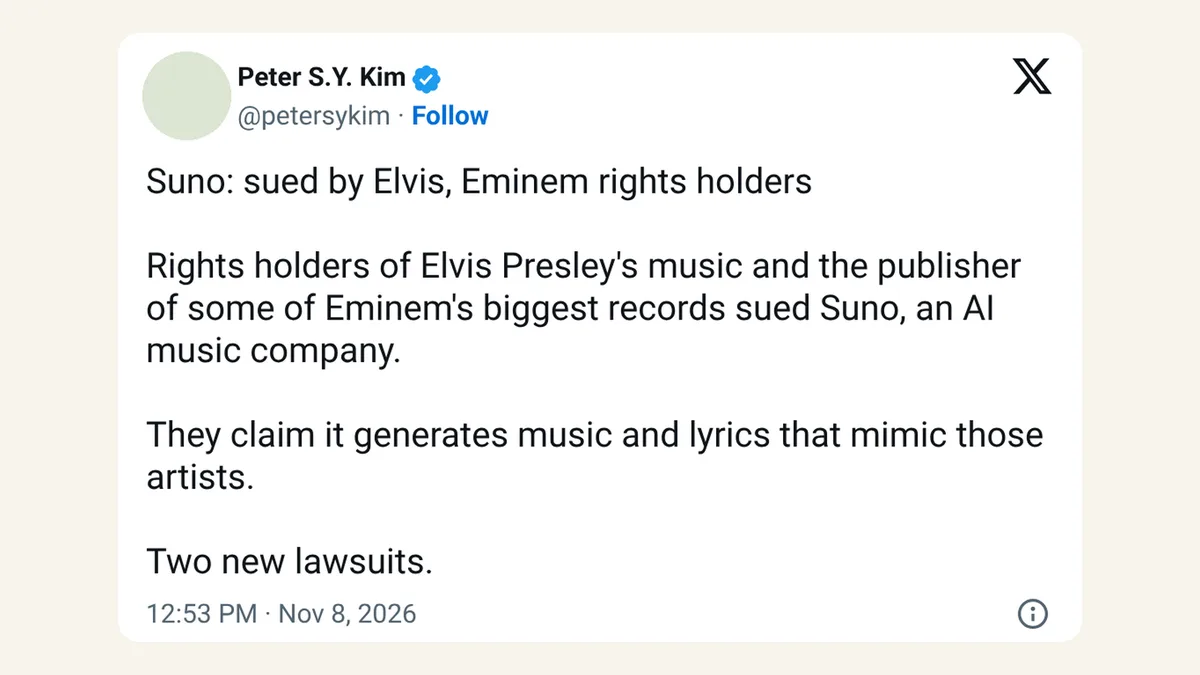
They're still being written. Record labels have sued AI companies, including Anthropic and OpenAI, over training on copyrighted songs; the companies say it's fair use. The Grammys say only human creators can be nominated or win, and the Oscars said in May that AI actors and writers can't win. Streaming services are adding tags and fraud checks.
So "human-made" is turning into something you can point to, and AI-assisted work is getting its own lane, with its own awards.
What can musicians and creators do now?
None of this means giving up. It means getting specific about what only you can do and making it easy to see.
- Label clearly. If you use AI, say how. If you don't, say that too. Listeners want to know, and platforms are starting to ask.
- Own your voice and your words. Keep dated lyrics, stems and session files. Read any AI tool's terms before you upload your own voice.
- Price the human part clearly. Clients choosing between a prompt and a person need to see what the person adds: revisions, a real performance, a rights-cleared track.
- Watch the platforms. Labeling and fraud rules change payouts. Check your distributor's AI policy every few months.
Monet's win shows people will cheer for a song even when they know AI helped make it. That should give working musicians a little room: listeners still care who's behind the music.
FAQ
Do AI songs earn royalties on streaming services?
They can, but on Deezer AI tracks get only 1-3% of streams, and up to 85% of plays on fully AI tracks in 2025 were fake.
Is it legal to sell music made with AI?
It depends on the tool's license and on lawsuits still in court. Read your tool's commercial terms before selling a track or using it for a client.
Can people really not tell AI music apart?
In Deezer's Ipsos survey, 97% of people couldn't tell in a blind listen.
Sources
- Deezer Newsroom: AI music exceeds 50% of daily uploads — July 21, 2026. Upload share, 90,000 a day, 13.4 million tagged in 2025, 1-3% of streams, up to 85% fraudulent, Ipsos survey results.
- CISAC/PMP Strategy AI study — nearly 25% of music creators' revenues at risk by 2028, up to €4 billion (projection).
- Reuters via Investing.com: New awards show celebrates AI music and its creators — By Reuters, November 14, 2026. Awards, lawsuits, musicians' worries.
- Recording Academy: 69th Grammy Awards rulebook (PDF) — "Only human creators are eligible" rule.
- Reuters: AI actors and writers will be ineligible for Oscars — May 1, 2026.