
TL;DR
Can you use AI-generated people in your ads, and do you have to say so?
Glif launched an AI modeling agency on October 30, 2026, with 165 AI people who can star in your ads. That makes cheap ads easy, but some sites label realistic AI people, and fake reviews break FTC rules. Label AI people where asked, never pass them off as real buyers, and keep a record of each ad.
Can you use AI models in your ads?
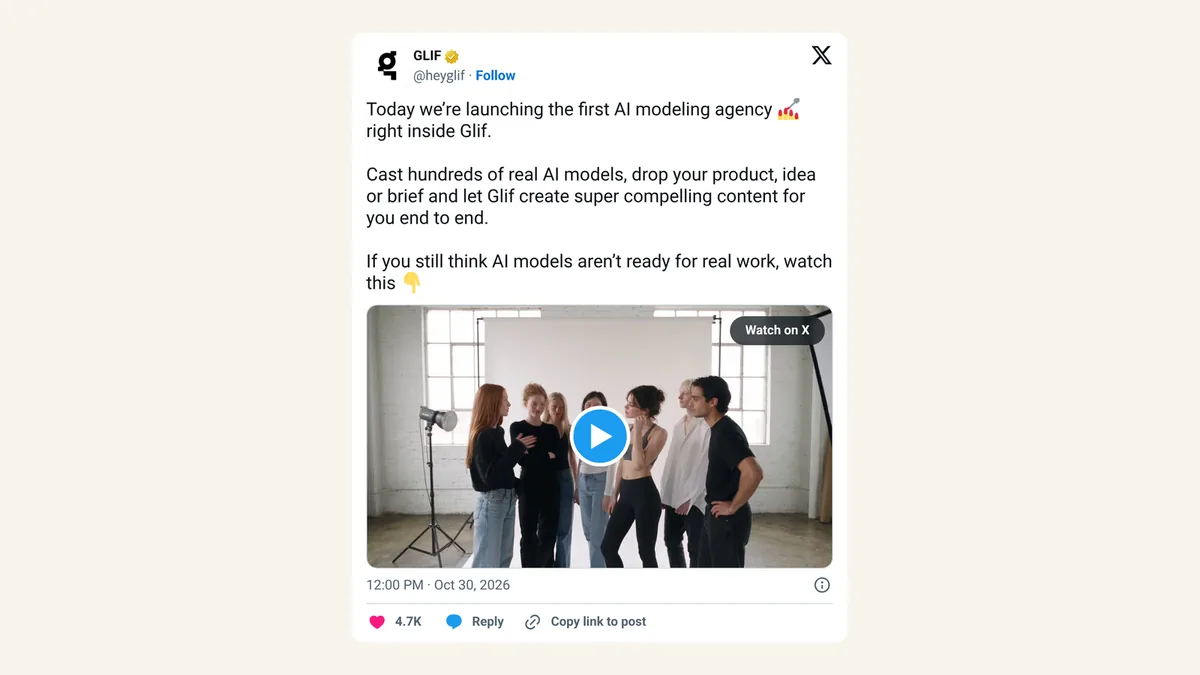
Yes, and it just got a lot easier. On Friday, Glif opened what it calls an AI modeling agency inside its app: pick one of 165 made-up characters, add a product photo and a short brief, and it builds the ad, from unboxing clips to 30-second app spots with captions. The same face stays consistent from shot to shot, so your "model" looks like one person across a whole campaign.
For a shop owner with no shoot budget, that's tempting. A candle maker can try out five ad ideas in an afternoon. Nothing we found in Meta's or YouTube's policies or in the FTC's review rule bans AI characters in ads on their own.
The trouble starts with what the ad implies. A polished AI model holding your candle reads as "this is an ad." The same AI person saying "I've burned these every night for a month" reads as a customer. That second one is where the rules come in.
Do you have to disclose AI-generated people in ads?
It depends on where the ad runs, and the platforms are doing some of the labeling for you.
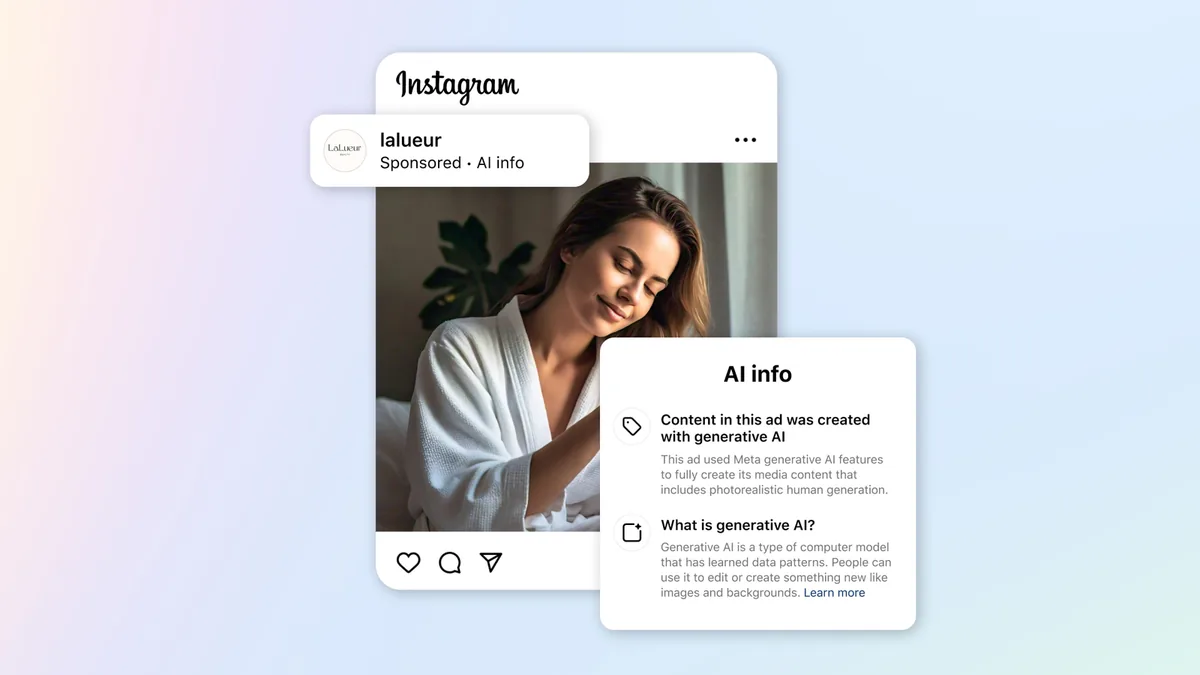
Meta (Facebook and Instagram). Meta labels ads made or heavily edited with its own AI ad tools. When those tools add an AI-generated photorealistic human, the label sits right next to "Sponsored," where people can't miss it. In a June 1, 2026 update, Meta said it is also starting to automatically detect ads made with third-party AI tools, using industry-standard signals (the hidden tags many AI tools stamp on their files), and adds an "AI info" label under a new "About this ad" menu. So an ad made in Glif may get labeled whether you mention AI or not.
YouTube. YouTube requires creators to disclose realistic AI content during upload, using the "AI use" setting in YouTube Studio. Its list includes content that "generates a realistic scene that didn't actually occur." A lifelike AI person unboxing your product sounds a lot like that. YouTube says creators who keep skipping the disclosure can get a label added for them, lose the video, or be suspended from the YouTube Partner Program, its money-making program for creators. These are YouTube's upload rules; ads bought through Google Ads have their own policies, which we haven't covered here.
Other networks, such as TikTok, have their own rules. Check the help pages of wherever you post before the ad goes live.
Can an AI person give a testimonial for your product?
This is the line we'd never cross. The FTC's Rule on the Use of Consumer Reviews and Testimonials (16 CFR 465.2) says a business can't write, create or sell a consumer review or testimonial that misrepresents that the reviewer exists, or that they used the product, or what their experience was. It's written out plainly in the rule text.
An AI character doesn't exist and has never touched your product. If your ad presents that character as a happy customer, you've built exactly the kind of fake review the rule describes. Glif's UGC-style clips (UGC means user-generated content, the "real person filming on their phone" look) are the format to watch, because the whole style is meant to feel like a genuine customer.
An AI model can show off your product. It can't vouch for it.
The rule targets fake reviews and testimonials. It doesn't ban AI people in ads. That's our reading of the rule as written, not legal advice, and if you sell anything health, money or kids related, a short call with a lawyer who knows advertising is cheap insurance.
Which AI ad ideas are fine, and which are risky?
| Idea | Our read | Why |
|---|---|---|
| AI model wearing or holding your product, styled like a normal ad | Fine | It reads as an ad, and platforms may label it anyway |
| AI person explaining how your app works, with captions | Fine, label it | Lifelike AI video can fall under YouTube's and Meta's AI labels |
| AI "customer" unboxing and raving about your product | Avoid | Looks like a real customer's testimonial |
| AI person quoting a real customer's review word for word | Risky | The words are real, but the face implies that person said them. Say on screen it's a real review read by an AI presenter |
| AI character with "Verified buyer" or "5 stars" on screen | Avoid | Claims a buyer exists who doesn't |
| AI model that looks like a real celebrity or local person | Avoid | Implies someone endorsed you who didn't |
One more thing for the "fine" pile: your ad still has to be true. An AI model can't make a lotion work faster than it does.
How do you make an AI ad you won't regret?
- Write "AI" where people will see it. A small "Made with AI" or "AI presenter" line on screen costs nothing, and it beats having the platform add the label for you.
- Use the platform's own setting. On YouTube, pick "Yes" under "AI use" when you upload. On Meta, expect an "AI info" label and don't try to strip it.
- Keep customer voices real. Real reviews go in real customers' names, with their permission. AI people stay presenters, never "buyers."
- Save a record for each ad. Note the tool, the date, the character and the brief. If a platform or customer asks how it was made, you'll have the answer in a minute.
- Read the fine print on rights. Check Glif's terms (or any tool's) for commercial use before you pay to boost the ad.
Our view: AI models are a fair way for a small business to look polished on a tiny budget. Use them as actors, tell people they're AI, and let your real customers do the praising.
FAQ
Will an "AI info" label hurt my ad's reach?
Meta's post doesn't say labels change how ads are shown. YouTube says disclosing AI content alone won't limit a video's audience or its ability to earn money.
Do I need to disclose AI if I only used it for the script or captions?
Not on YouTube. Its help page lists scripts, captions, thumbnails, idea generation and beauty or lighting filters as edits creators don't need to disclose. Disclosure is for realistic content that could mislead.
Can I use an AI version of myself in my own ads?
It's a different case from a made-up customer, since you're a real person backing your own product. Still say it's AI, and keep anything it says true to your real experience. YouTube treats cloning your own voice for voice-overs as a minor edit that doesn't need disclosure.
Does the FTC review rule apply to small businesses?
The rule applies to "a business," with no size limit in the section we read. It covers businesses that write or create fake reviews and testimonials, and ones that share testimonials they knew or should have known were fake.
Sources
- Meta: Expanding GenAI Transparency for Meta's Ads Products, February 3, 2025, updated June 1, 2026; labels next to "Sponsored" for AI photorealistic humans, third-party AI detection, "About this ad."
- YouTube Help: Disclosing use of GenAI content; what must and needn't be disclosed, the "AI use" setting, penalties, automatic labels.
- eCFR: 16 CFR 465.2, Fake or false consumer reviews, consumer testimonials, or celebrity testimonials (FTC); rule text.
- Glif Characters and Glif changelog: Glif Characters, September 28, 2026; the 165-character cast.
- Glif on X: launch post, October 30, 2026, 12:00pm ET.