

Hello fellow nerds,
"Will AI take my job?" might be the most-typed worry of the whole AI era. For most of this year, the real answer has been a shrug. This week the answer got more specific, and a little stranger. Some of the people running the world's biggest companies now seem to be saying that your job may well survive while the work inside it changes almost completely.
Start with Microsoft. In October it offered a voluntary exit, a buyout with money and career help attached, to eligible staff in participating teams in the US, Canada, India and the UK, as its chief people officer announced on the company blog. CNBC reported, citing a person familiar with the matter, that around 60,000 people were eligible, roughly 27% of the company. On Wednesday, Satya Nadella explained why at the DealBook Summit, and TechCrunch's write-up has the line we can't stop thinking about. He believes every employee will one day become "a manager of agents," AI tools that carry out tasks on their own, and he added: "That level of direction is what, by the way, is going to happen in all jobs."
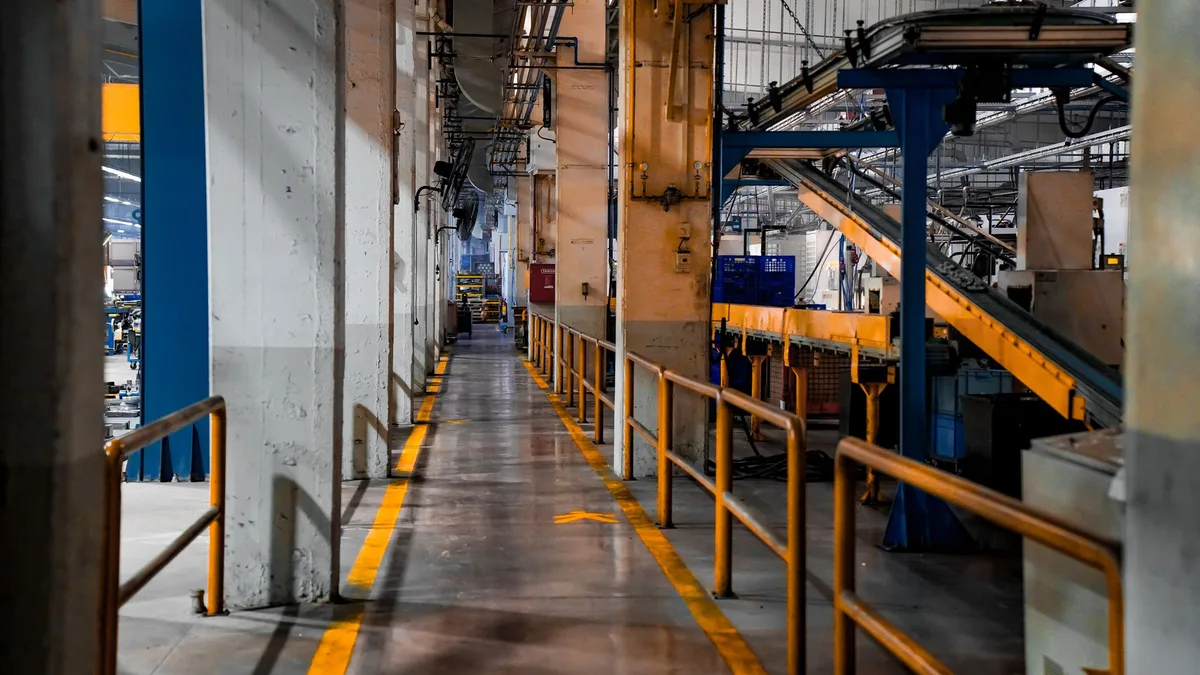
A day later, Procter & Gamble, the company behind Tide, Gillette and Pampers, held its investor day. Reuters quoted its chief product supply officer promising "a 20% to 30% reduction in our product supply workforce, including contractors, by 2030." Those are the people who make and move the products. The CEO talked up the company's growing use of AI in the same presentation, while Bloomberg Law tied the plan to mounting price pressures. So the reasons are mixed, and we'd be wrong to call it an AI story alone. Still, it's a big household name putting a hard number on a smaller workforce.
And then the twist. The latest Challenger, Gray & Christmas report, which tracks announced US job cuts, found that AI was cited for 1,265 cuts in October, its lowest monthly total this year. "Market/economic conditions" has now overtaken AI as the most common reason employers give in 2026.
So which is it? Is AI coming for jobs or fading as a cause?
Quieter than a layoff
We think both pictures are true, and the gap between them is the story. The change is coming in through the side doors: buyouts, roles that aren't refilled, teams asked to do more with fewer people, targets set years out. None of that looks like a dramatic layoff headline, and a lot of it barely shows up in the counts we all watch. Challenger itself didn't include Microsoft's offers in its October total, because it only counts voluntary programs once people accept or a company states a target. Its own read is careful: "These offers tend to signal more layoffs to come. That said, voluntary exit offers are a softer way to shrink."
We have mixed feelings about that softness. A buyout with a cushion is kinder than a surprise layoff, and we don't want to wave that away. Nadella even admitted, on a podcast the week before, that "we have created enormous anxiety in people" by the way the industry talks about AI. We appreciate the candor. We also notice that the choice on offer comes down to two options: adapt to a very different job, or take the money and go. That's a real choice, and a hard one, especially for people who liked the job the way it was.
What "manager of agents" actually means
Nadella's example is a small team at Microsoft that builds Cowork, the AI agent inside Microsoft 365. He said it has just 11 developers, and that "they build a software factory that builds the product. They don't build the product." Somewhere, a middle manager just felt a strange mix of vindication and dread.
We find the picture exciting and a bit dizzying. We're also skeptical in a few places. A CEO who sells AI has every reason to describe the future this way. Eleven top engineers at Microsoft are not a fair stand-in for a bookkeeper, a nurse's aide or a line worker. And Nadella himself said the shift is "going to take a bit more time than anyone expects." An analyst quoted by Reuters put the P&G plan in plain terms too: "Cost cutting can protect profitability, but it can't manufacture growth."
Here's the part that makes us uneasy. Managing AI sounds like a promotion, and for some people it will be. But a factory with a fifth or more fewer workers won't need all of the remaining jobs to be supervisors of machines. Some roles will be redesigned, and some won't come back. The people in those roles deserve straight talk about that, more than upbeat slogans.
Where that leaves the rest of us
Even so, we think the direction Nadella describes is already showing up in small businesses and solo work, well before any big company finishes reorganizing. A shop owner asks AI for a first draft of product listings and fixes the tone. A freelancer has it sort a month of invoices and checks the totals. The doing gets shared, and the deciding stays with the person. We've argued before that the coordinator is the role that keeps its value, and this week a CEO said much the same thing from the other side of the desk.
So our practical advice is modest and doable. Spend a normal week noticing which tasks you already hand to AI, which you check, and which you'd never trust it with. Practice giving clear instructions and reviewing what comes back, because that skill carries over to almost every tool. Hold on to the parts of your work that depend on judgment and relationships: knowing a customer, reading a room, making the call when the facts are messy. If your employer announces a buyout or a reorganization, ask what your role is turning into, along with whether it survives. And if your field looks like P&G's supply chain, it's worth building a small savings cushion and a skill outside the current job, calmly, while you have time.
We don't think AI is about to take everyone's job. We do think it's already changing what a job is, slowly enough that the layoff numbers can look calm while the work underneath them moves.
So here's the question we'll leave you with: if your job turned into managing AI tomorrow, which part of the work would you most want to keep doing yourself?
— Artificially Nerdy
THE NERD SIGNAL
Enjoyed this? Rocky has more where that came from.
Get The Nerd Signal in your inbox every Tuesday and Friday: the AI news that matters, a hack you can try and a way to save money, in plain English.
Sources
- Microsoft Official Blog: Introducing a Voluntary Exit Offer (October 26, 2026)
- CNBC: Microsoft offers voluntary buyouts to 60,000 employees as AI leads to efficiency push (October 26, 2026)
- TechCrunch: Microsoft CEO Satya Nadella explains why he asked 60K employees to quit (November 18, 2026)
- Reuters via Investing.com: Procter & Gamble targets up to $10 billion in productivity savings as costs stack up (November 19, 2026)
- Bloomberg Law: P&G Aims to Reduce Manufacturing Workforce Up to 30% by 2030 (November 20, 2026)
- Challenger, Gray & Christmas: Job Cut Announcement Report, October 2026 (PDF) (November 5, 2026)