
TL;DR
Is AI actually paying off for companies?
For a few tech giants, yes, but most companies aren't seeing gains yet, and AI stocks slid Wednesday on those doubts. Expect tighter AI budgets and slow hiring in some jobs. Nothing urgent: don't panic-sell, check how much of your retirement fund sits in big tech, and keep only AI tools that earn their keep.
Why are AI stocks falling?
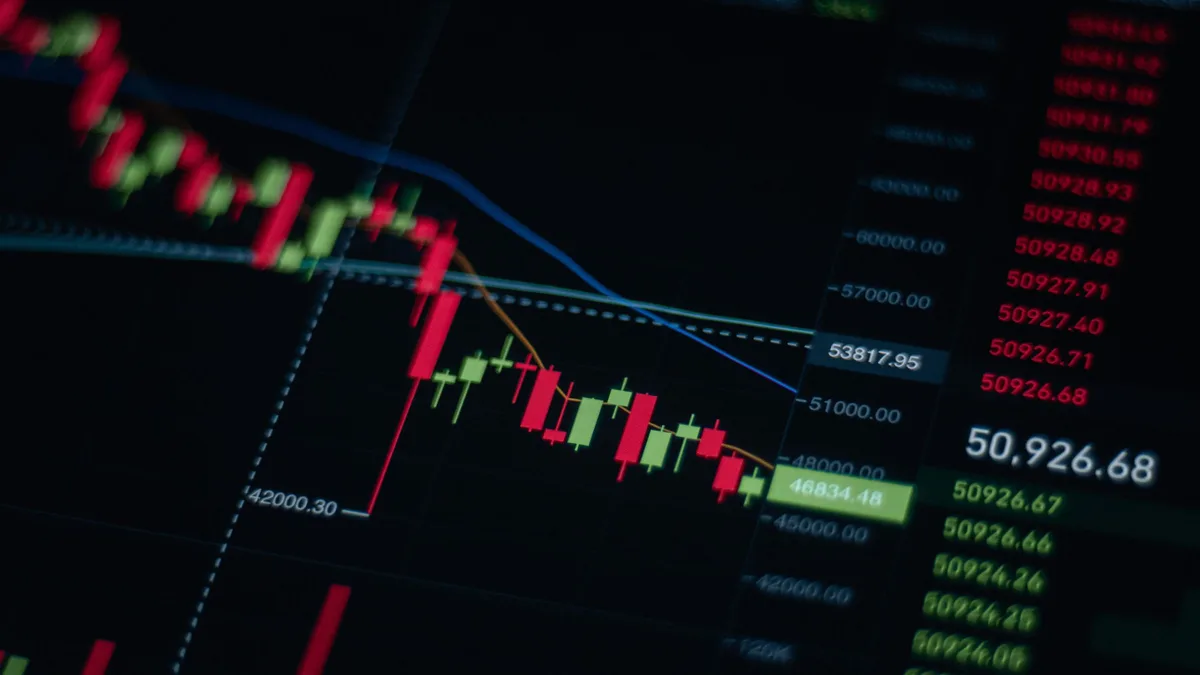
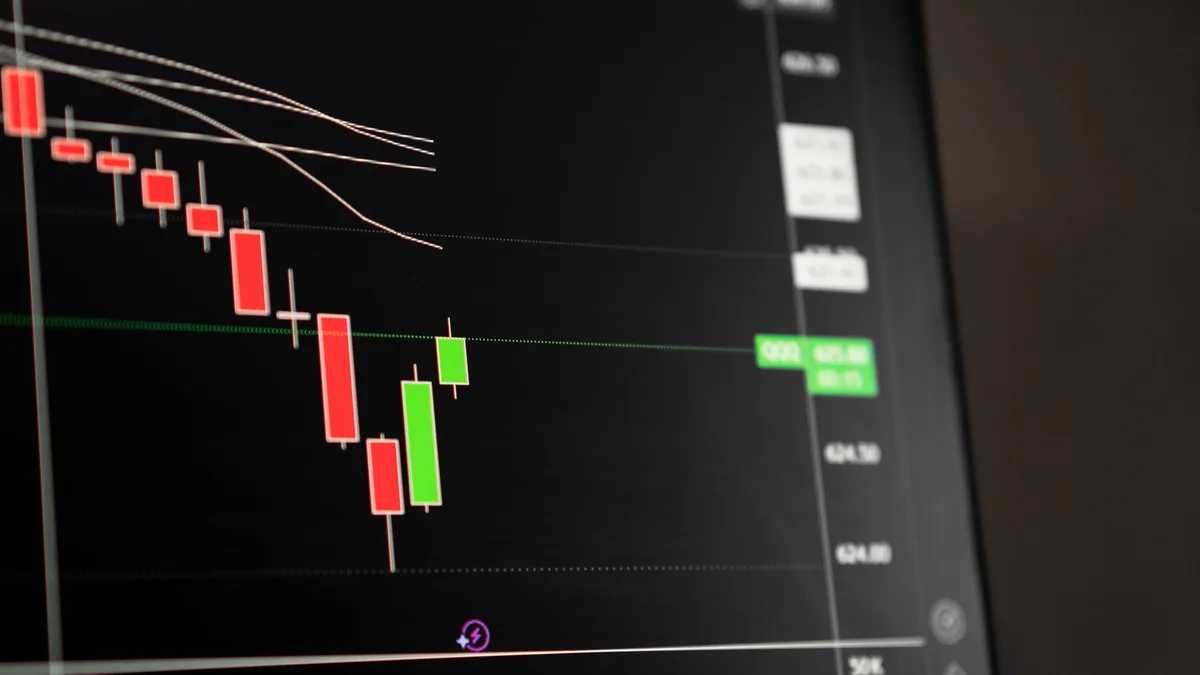
Investors are questioning the bill. On Wednesday, November 25, 2026, the Nasdaq closed down 0.6% after steeper losses earlier in the day, CNBC reported. Nvidia fell 4%, Oracle dropped more than 5% and memory maker Micron lost 4%. Venu Krishna, head of US equity strategy at Barclays, told CNBC that "what the market is telling you is that the AI growth narrative has hit a wall."
The worry is the size of the spending and how it's paid for. Tech companies are building data centers, the huge warehouses of computer chips that run AI, and a lot of that is done with borrowed money. The Federal Reserve's Financial Stability Report from November 13 says debt issued for advanced computing passed $680 billion by October 2026, about five times the $130 billion issued in all of 2023. That's about 31% of investment-grade bond sales by nonfinancial companies this year, meaning the safer kind of corporate debt. Market contacts the Fed surveyed most often named AI as a risk to financial stability.
US stock markets are closed today for Thanksgiving and reopen Friday for a half day. You can catch up on the earlier AI stock selloff for how this started.
Is AI boosting productivity yet?
Not in the broad numbers. Torsten Slok, chief economist at investment firm Apollo, wrote on October 24 that revenue per worker and profit margins are rising for the "Mag 7," the seven biggest US tech companies, but are flat for the other 493 companies in the S&P 500. He also found "no signs of AI boosting productivity growth."
His sharpest line is about budgets. With no impact on the bottom line, he wrote, mainstream corporate America is "starting to view token spending not as a source of growth but as a cost center." Tokens are the chunks of text AI tools are billed by, so token spending is simply the AI bill. A cost center is something a company tries to shrink.
The AI story will be decided in the S&P 493, not the Mag 7, Slok wrote.
Plenty of people still save time with AI every day. Those savings just haven't shown up as higher profits at most companies yet, and profits are what investors are paying for.
Is AI taking jobs right now?
In a few areas, it looks that way; across the whole economy, not much yet. Fed Governor Lisa Cook said in a speech on November 20 that there is "some evidence that labor demand has cooled for coding jobs in the software industry and in simultaneous translation." In the same speech, she said there is "little evidence that AI is producing a significant imprint on the aggregate unemployment rate."
So if you write code or translate for a living, slower hiring isn't in your head. For most other jobs, the bigger near-term risk may come from the money side. When companies treat AI as a cost to trim, they may also get pickier about new hires while they wait to see results.
What does the AI stock slide mean for my 401(k)?
Probably more than you think, because a few giant tech companies make up a large share of the most common index funds. If AI stocks keep sliding, a plain S&P 500 fund feels it.
Selling in a hurry rarely helps, but knowing what you own does. Log in to your 401(k) or IRA, look at your funds' top holdings, and decide whether that mix matches how long you have until you need the money. If you're unsure, a fee-only financial adviser can help. Nothing here is investing advice.
Should my small business keep paying for AI tools?
Keep the ones that pay for themselves. Slok's numbers say big companies are starting to ask that question, and a small business can ask it faster. List every AI subscription, write down what each one did for you last month, and cancel the ones you can't point to a result for.
One founder on X, @SecureAgentzAI, put the skeptic's case bluntly on November 20: "Productivity theater? Sure. Measurable bottom-line impact that moves margins for the S&P 493? Flat." He sells an AI agent product, so he has a stake, but the question is fair for any business owner.
Our take
We think this slide is a reality check, not a collapse. AI is useful, and the biggest tech companies are clearly making money from it. But hundreds of billions in borrowed data center money needs most businesses to see real gains, and the best data we have says they mostly haven't yet. That gap can close, slowly or suddenly. Until it does, treat AI like any other expense: keep what earns its place, and keep your savings spread out.
— Artificially Nerdy
What to do now
- Don't make big moves in your retirement account based on one bad week.
- Check your 401(k) or IRA funds' top holdings so you know how much rides on big tech.
- Audit your AI subscriptions and cancel any you can't tie to a result.
- If you code or translate for a living, keep your skills and portfolio current, since hiring there has cooled.
- Watch Friday's half-day trading and the Fed's December 8-9 meeting for the next signals.
FAQ
What is the S&P 493?
It's a nickname for the S&P 500 minus the seven biggest tech companies. Analysts use it to see how ordinary large companies are doing without the giants skewing the average.
Is the AI boom a bubble?
Nobody knows yet. The Fed says market contacts see AI as a top financial stability risk, and Apollo's Slok says the gains so far show up mostly at the biggest tech companies.
Are stock markets open on Black Friday?
Yes, for a shortened session. US stock markets close early on Friday, November 27, after being closed on Thanksgiving.
Why does borrowed money for AI matter to regular people?
If AI projects don't earn enough to repay the debt, lenders and investors take losses, and those can spread to retirement funds and to how easily businesses can borrow.
Sources
- CNBC, Nvidia and AI stocks fall in tech selloff (November 25, 2026)
- Federal Reserve, Financial Stability Report (November 13, 2026)
- Apollo, The Daily Spark, "No signs of AI payoff outside the tech sector" (Torsten Slok, October 24, 2026)
- Federal Reserve Governor Lisa Cook, speech (November 20, 2026)
- @SecureAgentzAI on X (November 20, 2026)